


Cortisol and the Body: A Practical Session on Stress and Survival
Stress doesn’t just live in the mind — it leaves its fingerprint on the body. Cortisol is a big part of that story. This hormone plays a central role in our survival system. It shapes how the body stores fat, where it accumulates, and how our shape and weight can shift under stress. That’s one of the reasons body composition looks and feels so different depending on whether we’re in a stressed or settled state. In this session, I explain how cortisol functions within the stress response and how it affects our embodied experience. Most importantly, I’ll guide you through ways to help the body soften, settle, and come out of survival mode — using signals of safety that speak directly to your nervous system.
Who It’s For
This session is for anyone who lives with chronic or situational stress and wants to ease its impact on the body.
It’s also for you if you’ve noticed that stress has changed your weight, shape, or metabolism — and you’re looking for insight that goes deeper than calories or willpower.
No prior experience is needed — just curiosity and a willingness to connect with your body in a new way.
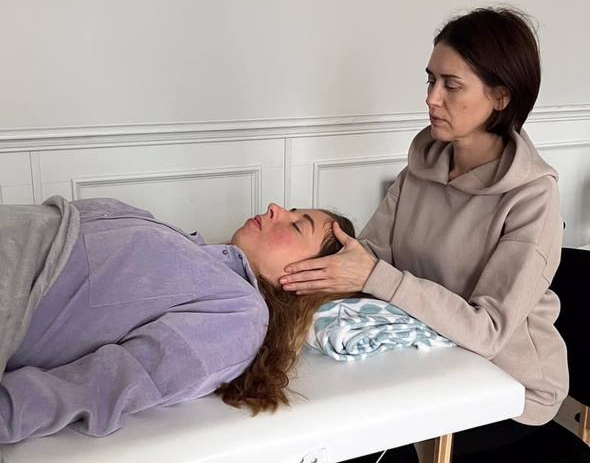
What You’ll Learn and Practice
- How the survival response works — one of the oldest and most powerful systems in the body;
- The role of cortisol in that system, and how thoughts, feelings, and daily experiences increase or decrease its levels;
- How fat storage and distribution are hormonally shaped by survival biology;
- What signals of safety look like, and how the nervous system decides whether to stay in alert or return to rest;
- Why motivation can feel exhausting, and how to recognize when it’s driven by survival instead of connection;
- How to use bilateral stimulation — a gentle technique used in trauma therapy (including EMDR) that helps the brain process and integrate difficult experiences by rhythmically engaging both hemispheres — for example, through tapping or movement;
A set of simple, powerful tools to tell your nervous system: “you’re safe now” — tools you can begin using right after the session.
Format
This is a live online session that weaves together theory, embodied experience, and supportive conversation.
I always begin with the science — but I don’t stop there. I’ll guide you into direct, grounded practices that help your body feel what your mind might already know.
Throughout the session, I adapt the pace and focus to the group, so you receive insights and tools that speak to your own lived story.
We’ll also have time to reflect, ask questions, and connect with others — because feeling safe often begins with feeling understood.
If you feel like stress is shaping your body in ways you don’t understand — you’re not alone.
Join this session to begin reshaping the relationship between your nervous system and your lived experience.
When the Body Thinks It’s Not Safe: A Practical Session on Cortisol and Stress
Stress doesn’t just live in the mind — it leaves its fingerprint on the body. Cortisol is a big part of that story.
This hormone plays a central role in our survival system. It shapes how the body stores fat, where it accumulates, and how our shape and weight can shift under stress. That’s one of the reasons body composition looks and feels so different depending on whether we’re in a stressed or settled state.
In this session, I explain how cortisol functions within the stress response and how it affects our embodied experience. Most importantly, I’ll guide you through ways to help the body soften, settle, and come out of survival mode — using signals of safety that speak directly to your nervous system.